



The Outreach Problem Nobody Talks About
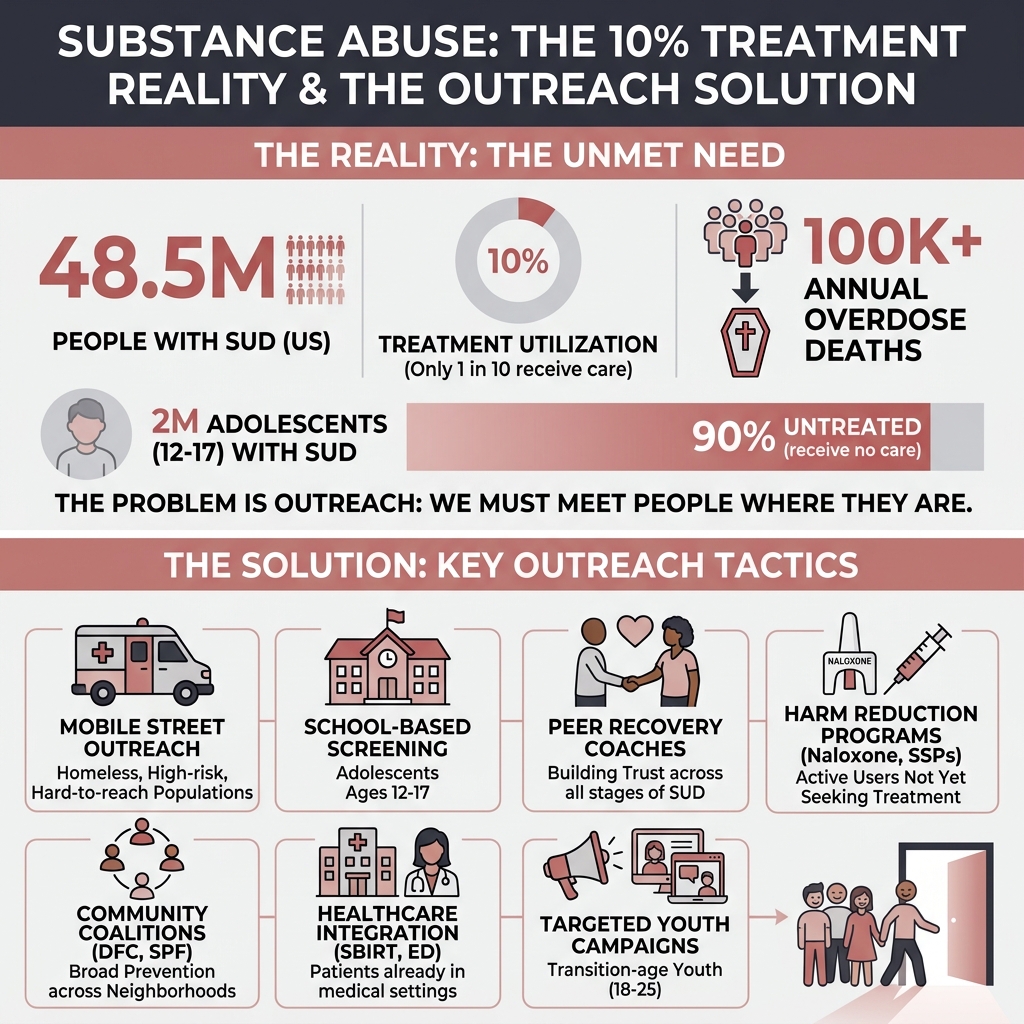
Substance abuse outreach tactics are the strategies organizations use to identify, engage, and connect people with substance use disorders (SUDs) to care — before crisis hits.
Here are the most effective tactics, at a glance:
| Tactic | Best For |
|---|---|
| Mobile street outreach | Homeless, high-risk, hard-to-reach populations |
| School-based screening | Adolescents ages 12-17 |
| Peer recovery coaches | Building trust across all stages of SUD |
| Harm reduction programs (naloxone, SSPs) | Active users not yet seeking treatment |
| Community coalitions (DFC, SPF) | Broad prevention across neighborhoods |
| Healthcare integration (SBIRT, ED) | Patients already in medical settings |
| Targeted youth campaigns | Transition-age youth (18-25) |
The numbers are stark.
In 2023, an estimated 48.5 million people in the U.S. had a substance use disorder. Overdose deaths exceeded 100,000 — mostly driven by fentanyl.
And yet only about 1 in 10 people with an SUD ever receives treatment.
For adolescents, it’s even worse. Roughly two million teens ages 12-17 meet the clinical criteria for substance abuse or dependence each year. About 90% of them receive no treatment at all — not even mental health services.
That’s not a treatment quality problem. That’s an outreach problem.
People aren’t walking through your doors because no one is meeting them where they are. The gap between who needs care and who receives it comes down to how well — and how early — outreach efforts engage them.
Closing that gap requires more than good intentions. It takes structured, evidence-based tactics that work across schools, communities, healthcare settings, and the streets.
I’m Michael Krowne, CEO and Co-Founder of Faebl Studios, the leading digital marketing agency for addiction treatment centers in the U.S. — and a person in long-term recovery myself. Over the past decade, I’ve helped treatment facilities generate more than 10,000 admissions by applying the same evidence-based thinking behind clinical substance abuse outreach tactics to patient acquisition and engagement strategies. In this guide, I’ll walk you through exactly how to put these tactics to work.
Understanding the Core Principles of Harm Reduction and Prevention
Before we dive into the “how-to,” we need to align on the “why.” Traditionally, the U.S. approach to substance use was binary: you were either in “active use” or “abstinent.” If you weren’t ready for the latter, the system often had nothing for you.
Modern substance abuse outreach tactics have shifted toward a harm reduction framework. This isn’t about “approving” of drug use; it’s about acknowledging the reality that not everyone is ready or able to stop immediately. Like seatbelts in cars or condoms in sexual health, harm reduction aims to keep people alive and healthy until they are ready for the next step.
Harm Reduction vs. Traditional Abstinence
Traditional models often tie treatment to punitive systems or legal mandates. Harm reduction, however, is patient-centered and non-judgmental. It prioritizes the individual’s quality of life over the immediate cessation of use.
| Feature | Harm Reduction | Traditional Abstinence |
|---|---|---|
| Primary Goal | Reduced harm and improved safety | Complete sobriety |
| Approach | Non-judgmental, meets people where they are | Often rigid or punitive |
| Success Metric | Survival, infection reduction, engagement | Negative drug tests |
| Core Tactics | Naloxone, SSPs, drug-checking | Detox, 12-step, inpatient |
Key Evidence-Based Harm Reduction Tactics
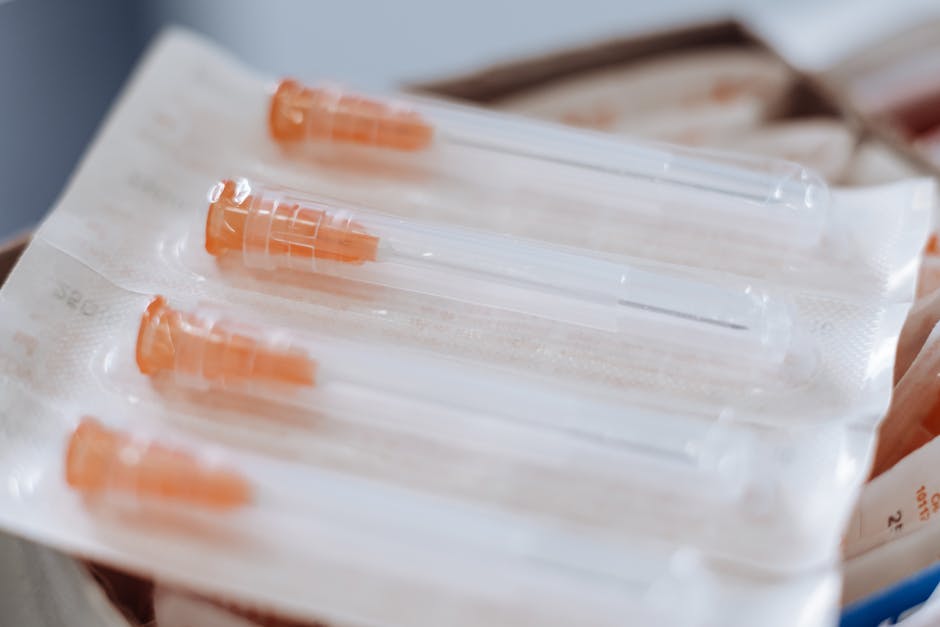
- Naloxone Distribution: Overdose education and naloxone distribution (OEND) programs are literal lifesavers. Research shows that making naloxone community-accessible significantly decreases overdose deaths.
- Syringe Service Programs (SSPs): These programs do more than provide sterile equipment. They reduce HIV and Hepatitis C (HCV) prevalence by up to 50% and, surprisingly to some, actually increase the likelihood that a person will enter formal treatment.
- Drug-Checking Services: With the illicit market flooded with fentanyl, tools like fentanyl test strips allow users to identify what is actually in their supply. This is a critical engagement tool for “opioid-naive” users who may be at high risk of accidental overdose.
Read more about harm reduction strategies from SAMHSA
Federal Strategies and Substance Abuse Outreach Tactics for Youth
The federal government has recognized that we cannot “arrest our way” out of the addiction crisis. In recent years, agencies like SAMHSA and the DEA have pivoted toward massive education and outreach efforts. In FY 2012 alone, federal resources totaling $1.7 billion were requested to support education and outreach programs aimed at preventing the initiation of drug use.
For treatment centers, understanding these federal frameworks is essential for growth marketing for rehabs. When you align your facility’s outreach with federal priorities, you tap into existing community momentum.
Substance Abuse Outreach Tactics for Transition-Age Youth
Young adults ages 18–25 are at the highest risk for initiating substance misuse, particularly alcohol and marijuana. This is especially true for “transition-age youth” who are not attending college and may lack the social safety nets found on university campuses.
The Above the Influence (ATI) campaign is a prime example of targeted messaging. Instead of “scare tactics,” which research shows rarely work, ATI focuses on empowering youth to live “above” the pressures of substance use.
Community-Based Substance Abuse Outreach Tactics
Local problems demand local solutions. The Drug Free Communities (DFC) Support Program mobilizes multi-sector coalitions — including parents, businesses, media, schools, and law enforcement — to address specific local drug trends.
We recommend using the Strategic Prevention Framework (SPF). This five-step process involves:
- Assessment: What drugs are being used in your specific California neighborhood?
- Capacity: Who are the local influencers (doctors, coaches, faith leaders)?
- Planning: What evidence-based programs fit your demographic?
- Implementation: Rolling out the outreach.
- Evaluation: Did it actually reduce use or increase treatment inquiries?
Implementing Assertive Outreach to Close the Adolescent Treatment Gap
We have to talk about the “90% problem.” If 90% of adolescents with an SUD aren’t getting help, our current “wait for them to call us” model is a failure.
Assertive outreach is a proactive strategy where we go to the youth, rather than waiting for a crisis to bring them to us. This is particularly difficult because many teens with SUD do not have “comorbid” issues like depression or conduct disorder that usually trigger a referral. They are essentially “flying under the radar.”
Adapting Substance Abuse Outreach Tactics for Non-Comorbid Teens
To find these “invisible” at-risk youth, we use the Gateway Provider Model. This involves training the people who see teens every day — teachers, primary care doctors, and coaches — to spot the early signs of misuse.
One of the most effective tools is Multiple Gating Screening. This is a tiered assessment process used in schools:
- Gate 1: Teacher ratings to identify behavioral shifts.
- Gate 2: Brief parent interviews to assess home life.
- Gate 3: Direct student surveys to identify substance use.
Programs like CRAFT (Community Reinforcement and Family Training) are also vital. CRAFT teaches families how to stay connected to their child while non-confrontationally encouraging them toward treatment. In studies, CRAFT has shown a 70% success rate in getting initially resistant youth to enroll in care.
Overcoming Barriers with Assertive Substance Abuse Outreach Tactics
Why don’t teens get help? Stigma and fear of legal trouble are at the top of the list. Assertive outreach teams must prioritize confidentiality and emotional safety.
Mobile outreach teams, often consisting of a clinician and a peer recovery specialist, can engage youth in “natural environments” like parks, community centers, or digital spaces. By offering resources like street and mobile outreach guidance, we can bridge the gap between the street and the clinic.
For more on where the industry often fails, check out what most treatment centers get wrong.
Integrating Outreach into Healthcare and Community Settings
Your local Emergency Department (ED) or primary care office is the “front porch” of the addiction treatment system. Unfortunately, it’s a porch that many people are afraid to step onto because of the stigma they’ve faced in medical settings.
Training and Resources for Medical Professionals
The American Academy of Pediatrics (AAP) recommends that medical professionals screen all youth for substance use at every healthcare exam, starting at age 12. We use a model called SBIRT (Screening, Brief Intervention, and Referral to Treatment).
Recent policy changes have made this easier. The MAT Act eliminated the “x-waiver,” meaning any provider with a standard DEA registration can now prescribe buprenorphine for opioid use disorder. This is a massive opportunity for outreach: if a patient can get their medication from their regular doctor, the “stigma barrier” of going to a “rehab center” is removed.
Leveraging Lived Experience in Outreach
The most effective messenger isn’t always a doctor in a white coat. It’s often someone who has walked the path. Peer Recovery Coaches build what we call “Continuum Capital” — the trust and rapport that professional clinicians sometimes struggle to establish.
Research shows that 68% of youth trust individuals with lived experience for prevention and outreach messages. These “trusted messengers” can create safe spaces where patients feel comfortable being vulnerable. This is a core component of attracting private pay clients, as families are looking for relatable, human-centric care.
Measuring Success: Metrics and Future Directions for Outreach
If you aren’t measuring it, you aren’t managing it. To know if your substance abuse outreach tactics are working, you need to track specific Key Performance Indicators (KPIs).
- Treatment Entry Rates: How many people engaged via outreach actually showed up for an intake?
- Overdose Reduction: Is there a community-level decline in fatal overdoses in the areas where you are distributing naloxone?
- Engagement Longevity: How long are patients staying in touch with peer coaches?
- Community Substance Use Declines: Tracking local school surveys to see if prevention efforts are moving the needle.
Recent research on naloxone access laws suggests that policy changes are only as effective as the outreach that supports them. Simply passing a law isn’t enough; we have to educate the public on how to use these new tools.
For a deeper dive into how to track these efforts, see our guide on what is outreach marketing.
Frequently Asked Questions about Substance Abuse Outreach
What is the difference between harm reduction and prevention?
Prevention focuses on stopping substance use before it starts (upstream), while harm reduction focuses on reducing the negative consequences for those who are currently using (midstream). Both are essential components of a comprehensive outreach strategy.
How can community coalitions improve treatment entry rates?
Coalitions bridge the gap between different sectors. For example, a coalition can create a direct referral pipeline from the local high school or police department to a treatment facility, ensuring that when someone is identified as needing help, the path to care is clear and immediate.
Why is the treatment gap so high for adolescents?
The 90% gap exists because most adolescents with SUD don’t have the “acting out” behaviors that lead to traditional referrals. Additionally, many parents are unaware of the signs of use or are afraid of the stigma associated with seeking help for their child.
Conclusion
The addiction crisis in the United States, and specifically in hubs like Los Angeles and throughout California, requires a fundamental shift in how we find and engage patients. We can no longer afford to be passive. By implementing assertive substance abuse outreach tactics—from harm reduction and peer support to school-based screening and healthcare integration—we can finally begin to close the treatment gap.
At Faebl Studios, we specialize in this kind of growth acceleration. We understand that effective outreach is the heartbeat of a successful treatment center. We don’t just want to help you find more patients; we want to help you find them earlier, when the chance for a successful, long-term recovery is at its highest.
Are you ready to see where your facility can grow? Start your growth acceleration journey with a free audit from our team today. Let’s build a bridge to care together.